Most of us worry about the AQI outside. We check the app, close the windows, run the purifier.
But new paint on walls, new wardrobe in your bedroom, phenyl or floor cleaner under the sink, agarbatti in the pooja room, all of it releases volatile organic compounds in the indoor environment where we spend our most time. Research shows VOC concentrations inside our homes can be higher than outdoors, in both summer and winter.
Summer weather makes it worse. At 36–42°C, off-gassing from furniture and building materials can double or triple. Monsoon humidity adds a second peak: it accelerates release of Formaldehyde from the pressed-wood boards used in most modular furniture.
The good news: most of this is fixable with the right questions and a few habit changes. These six checklists cover the situations where it matters most.
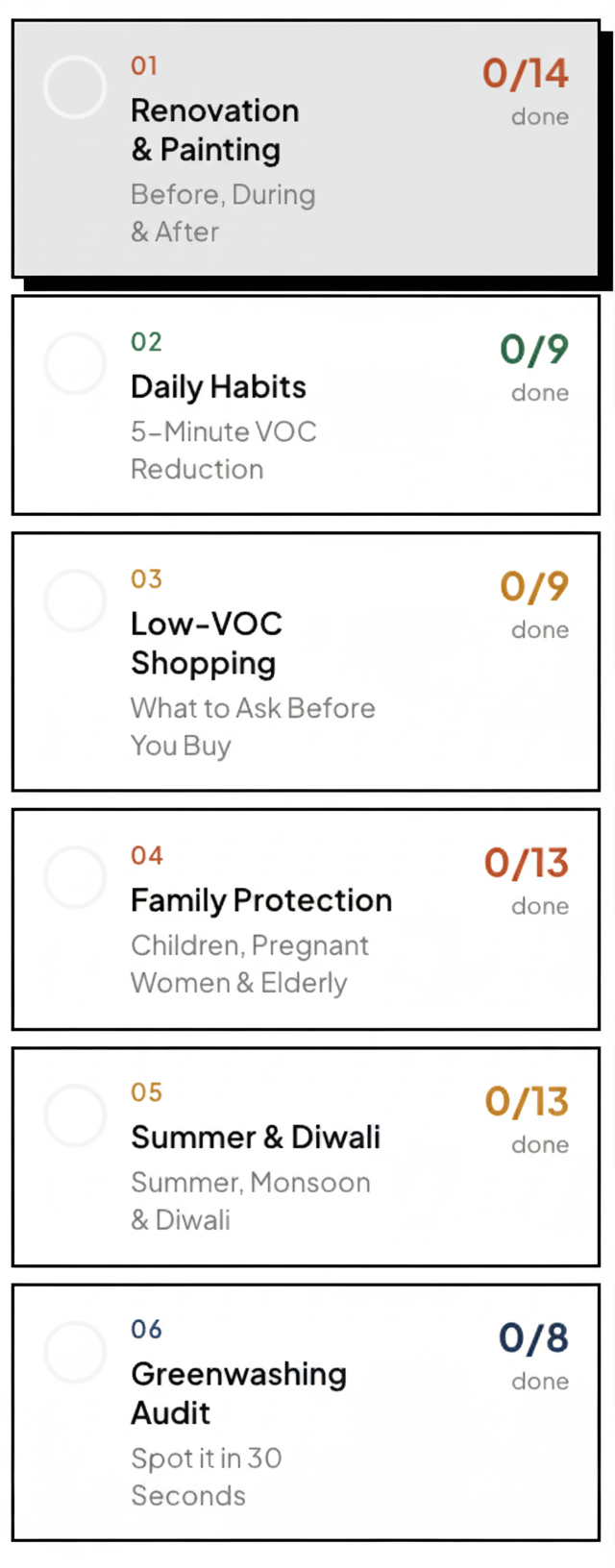
Renovation & Painting, About to renovate or repaint? Start here. Covers what to do before, during, and after, including the critical 72-hour window after painting.
Daily Habits, Small repeatable actions that reduce your daily VOC load: ventilation, cooking, cleaning, incense, and storage.
Low-VOC Shopping, Buying furniture or cleaning products? The questions to ask at the shop that cut through greenwashing, including what the ISI mark and E1 grade actually mean.
Family Protection, Specific steps for children, pregnant women, and elderly residents, plus the warning signs that VOCs may already be affecting your household.
Summer, Monsoon & Diwali, The three seasonal peaks for indoor VOC exposure in Indian homes, and what to do at each one.
Greenwashing Audit, How to read product claims in 30 seconds. What to ignore, what to trust, and which certifications are actually verified.
Your progress saves automatically in your browser. Work through one checklist at a time and come back whenever. It will be exactly where you left it.
Related reading: VOCs: What They Are, Who They Harm, and What to Do and indoor air quality during a renovation
Email us at indoorairguide@outlook.com