The Problem It Solves
Opening windows during poor air quality pulls outdoor pollution indoors. Keeping them closed lets CO₂ build up, leading to grogginess, headaches, and poor sleep. No existing tool balances both signals in one place. Our tool does.
How to Use It
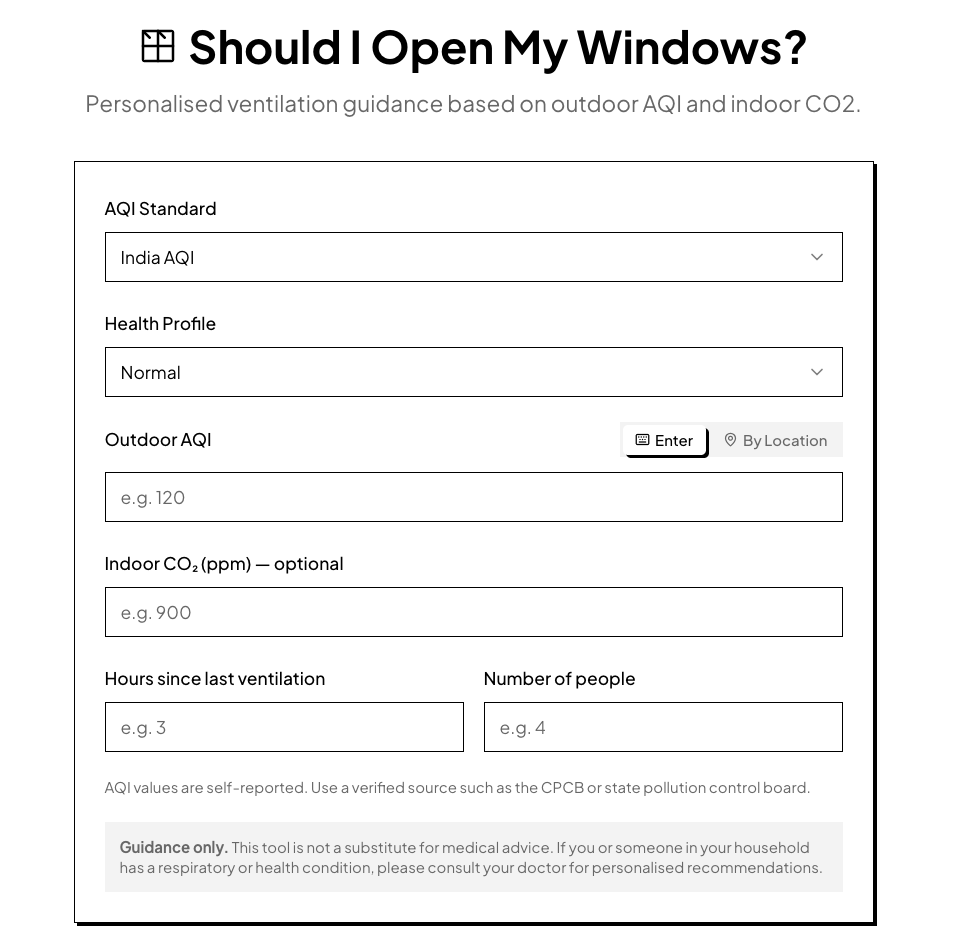
1. Enter Outdoor AQI
Get it from CPCB or Google. Or use the location search to fetch it automatically.
2. Add CO₂ or Occupancy
Optionally enter your indoor CO₂ reading, or simply enter how long the room has been closed and how many people are in it.
3. Select Health Profile
Normal or Extra Caution, recommended for children, elderly, or anyone with asthma.
That's it: a colour-coded recommendation appears instantly.
What You Get
You get a clear, specific action, not just a colour:
Safe to Ventilate
"Indoor CO₂ elevated. Open windows for 10–15 mins."
Use Caution
"Short air flush advisable. Consider running a purifier."
Keep Windows Closed
"Keep windows closed. Purifier on high. Vent 2 mins every hour."
Safety alert: In critical situations involving very high CO₂ paired with heavily polluted outdoor air, the tool shows a safety alert advising you to move to fresh air immediately.
Explore More Tools
Free tools to help you find, compare, and evaluate air purifiers.
Related reading: Stale air smells, but not all of it — why CO₂ and odourless VOCs build up in closed rooms, and what to do about it.
Related reading: Recirculation vs fresh air inside your car: the same trade-off in a much smaller volume.
Related reading: India AQI vs US AQI — why the same PM2.5 reading produces two different numbers, and which one to trust when deciding whether to open the windows.
Related reading: Pollen FAQs for India — when opening windows brings in more pollen than pollution, and how to tell the seasons apart.
Related reading: Indoor air quality and exercise at home — why a closed workout room is the one time ventilation timing matters most.
Need help? Write to us at indoorairguide@outlook.com